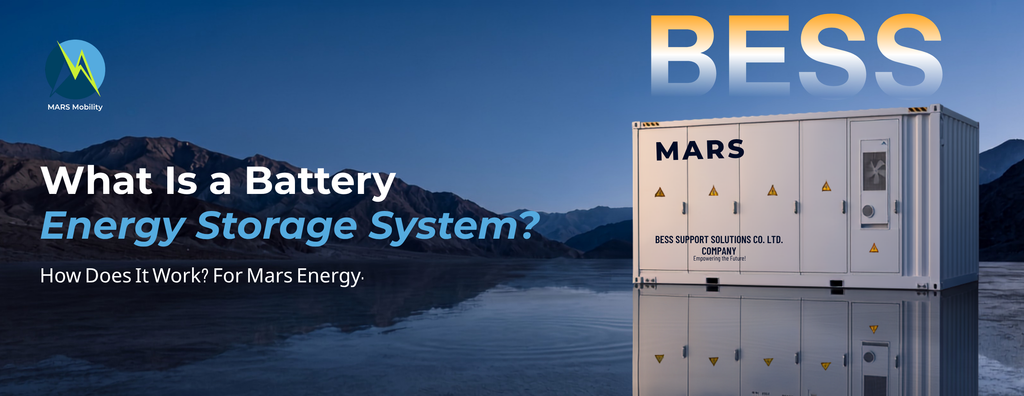
If you’ve been hearing the term “BESS” a lot lately – on the news, in government announcements, or from your electricity provider – you’re not imagining it. A battery energy storage system in India has quietly gone from a niche engineering concept to one of the most talked-about technologies in the country’s power sector. And there’s a good reason for that.
In this guide, we’ll break down what a BESS actually is, how it works in plain, simple terms, why it’s growing so fast in India, and how to think about choosing the right BESS solution for your home or business.
What Is a Battery Energy Storage System (BESS)?
A Battery Energy Storage System, or BESS, is a setup that stores electricity in rechargeable batteries so it can be used later, whenever it’s needed most. Think of it like a giant, smart power bank – except instead of charging your phone, it powers homes, factories, hospitals, or entire sections of the electricity grid.
Here’s the simplest way to understand it: solar panels only generate electricity when the sun is out, and wind turbines only work when the wind is blowing. But people need electricity all day and night. A battery energy storage system bridges that gap – it stores the extra power generated during the day and releases it during the evening, at night, or whenever demand spikes or supply drops.
In short, a BESS doesn’t generate power. It stores and manages it, making the entire electricity system more flexible, reliable, and efficient.
How Does a Battery Energy Storage System Work?
A BESS works in three simple stages, on a repeating cycle:
1. Charging
When there’s surplus electricity available, from solar panels, wind turbines, or even the regular grid during low-demand hours, the system draws in that extra power and stores it in battery cells, most commonly Lithium Iron Phosphate (LFP) cells, known for their safety and long life.
2. Storing
The stored energy sits safely inside the battery, monitored constantly by a Battery Management System (BMS) that keeps an eye on temperature, charge level, and overall battery health, protecting it from overcharging, overheating, or damage.
3. Discharging
When electricity is needed, during a power cut, peak demand hours, or simply after sunset, the system releases the stored energy back into the home, business, or grid through an inverter, which converts the battery’s stored DC power into usable AC power.
This charge-store-discharge cycle can repeat thousands of times over a battery’s lifespan, which is exactly what makes BESS such a practical, long-term energy solution rather than a short-term fix.
Key Components Inside a BESS
A battery energy storage system isn’t just “a big battery.” It’s a complete engineered system made up of several parts working together:
- Battery Cells – The core energy-storing unit, typically lithium-ion or LFP chemistry for safety and longevity.
- Battery Management System (BMS) – The “brain” that monitors and protects the battery from overcharging, deep discharge, short circuits, and overheating.
- Power Conversion System (PCS) / Inverter – Converts stored DC power into usable AC power, and vice versa during charging.
- Energy Management System (EMS) – Software that intelligently decides when to charge, discharge, or hold energy based on demand and pricing.
- Thermal Management System – Keeps the battery within a safe temperature range, especially important in India’s hot climate.
- Enclosure or Container – Houses everything safely, whether it’s a compact wall-mounted unit for a home or a full outdoor container for industrial use.
Why Is Battery Energy Storage System Demand Growing So Fast in India?
This isn’t a small trend. India’s BESS sector is scaling at a pace few other energy technologies have managed. A few numbers help put this into perspective:
- India’s energy storage requirement is projected to grow from roughly 82 GWh in 2026-27 to over 411 GWh by 2031-32, according to the Central Electricity Authority’s National Electricity Plan.
- The country’s installed grid-scale battery storage capacity, which stood at under 1 GWh in 2025, is expected to multiply several times over by the end of 2026 alone, driven largely by falling battery costs and government-backed tenders.
- The government has backed this growth with real policy support, including a Production Linked Incentive (PLI) scheme worth over ₹18,000 crore for domestic battery cell manufacturing, and Viability Gap Funding (VGF) that covers a share of BESS project costs.
- BESS adoption is concentrated in states like Gujarat, Rajasthan, Maharashtra, Karnataka, and Uttar Pradesh, where renewable energy capacity is expanding rapidly and grid stability has become a priority.
Put simply: as India races toward its target of 500 GW of non-fossil power capacity, storage isn’t optional anymore. It’s the missing piece that makes solar and wind power actually usable around the clock, which is exactly why demand for reliable BESS solutions and BESS manufacturers in India is rising so quickly across both the industrial and residential segments.
Types of BESS Solutions
Not every BESS looks the same; the right type depends on where and how it’s being used.
Residential / Wall-Mounted BESS Compact, wall-mounted lithium battery units designed for homes and small offices. These typically range from a few kWh to around 5kWh per unit and are built for backup power, reducing electricity bills through net metering, and providing energy independence during outages.
Commercial & Industrial (C&I) BESS Larger-scale systems, often ranging from 86kWh to several hundred kWh, designed for factories, warehouses, hospitals, and commercial buildings. These systems focus on cutting peak demand charges, ensuring business continuity during outages, and integrating with solar or wind installations.
Containerised / Utility-Scale BESS Large, modular battery containers used for grid-scale applications, renewable energy integration, and backup power for critical infrastructure. These are engineered to handle extreme temperatures and operate reliably through hundreds of charge cycles every year.
Common Applications of BESS
Battery energy storage systems are being deployed across a wide range of use cases in India today:
- Renewable energy integration – Storing surplus solar and wind power for use after sunset or during low-generation periods.
- Peak demand management – Helping businesses avoid expensive peak-hour electricity tariffs by drawing on stored power instead.
- Backup power – Keeping hospitals, data centers, and critical infrastructure running during grid outages.
- Diesel generator replacement – Offering a cleaner, quieter, and often cheaper alternative to diesel backup for industrial facilities.
- Grid stability – Helping utilities balance the intermittent nature of solar and wind power at a national level.
- Electric vehicle charging support – Buffering demand spikes at EV charging stations, especially in commercial fleet applications.
Benefits of Installing a Battery Energy Storage System
For homeowners and businesses considering a BESS, the appeal generally comes down to a few clear benefits:
- Lower electricity bills – By storing cheaper, off-peak or solar-generated power and using it during expensive peak hours.
- Reliable backup power – No more waiting out long power cuts, especially valuable for hospitals, factories, and homes in areas with unstable grid supply.
- Reduced carbon footprint – Making better use of renewable energy instead of relying on diesel generators or fossil-fuel-based grid power.
- Long-term cost savings – Modern LFP-based systems can last 10+ years and handle 6,000+ charge cycles, making the upfront investment worthwhile over time.
- Energy independence – Less reliance on grid stability, especially useful for industrial units where downtime is costly.
How to Choose the Right BESS Manufacturer
If you’re evaluating options, a few things are worth checking before choosing a BESS manufacturer in India:
- Battery chemistry – LFP (Lithium Iron Phosphate) is currently the safest, most widely trusted chemistry for Indian conditions due to its thermal stability.
- BMS quality – A strong Battery Management System is what actually protects your investment long-term; don’t overlook this in favor of price alone.
- Local manufacturing & support – A manufacturer with an Indian manufacturing base and local service support means faster installation, easier servicing, and better accountability than importing from overseas.
- Warranty & lifecycle claims – Look for manufacturers offering clear cycle-life data (ideally 6,000+ cycles) and a solid warranty backing that claim.
- Customization – Whether you need a compact home unit or a containerized industrial system, the right manufacturer should be able to configure the system to your specific load and space requirements.
Mars Energy: A Trusted BESS Manufacturer in Kanpur, India
At Mars Energy & Mobility, we manufacture Battery Energy Storage Systems designed specifically for Indian conditions, from compact wall-mounted lithium batteries built for homes and offices, to rugged Commercial & Industrial BESS solutions engineered for factories and enterprise-scale power needs, to our full range of containerized BESS for renewable integration and grid backup.
Every system we build uses LFP battery technology, an in-house Battery Management System, and is manufactured under the Make in India initiative, right here in Kanpur, Uttar Pradesh. Whether you’re a homeowner looking to cut electricity bills, a business looking to reduce peak demand charges, or a distributor or EPC company looking for a reliable manufacturing partner, our team can help you find the right fit.
Get in touch with our team to discuss your energy storage requirements.
Frequently Asked Questions
What is the full form of BESS? BESS stands for Battery Energy Storage System, a technology that stores electricity in rechargeable batteries for use at a later time.
How long do battery energy storage systems last? Most modern lithium-based BESS units, particularly LFP systems, are rated for 6,000+ charge cycles and a 10+ year operational lifespan when properly maintained.
Is BESS the same as a solar battery? Not exactly. A solar battery is one type of application within the broader BESS category. BESS covers a wider range of use cases, including grid-scale storage, industrial backup, and EV-related applications, not just solar pairing.
Why is India investing so heavily in battery storage? As India expands its renewable energy capacity toward a 500 GW non-fossil power target, battery storage has become essential for managing the intermittent nature of solar and wind power and keeping the grid stable.
How do I choose the right BESS size for my home or business? It depends on your daily power consumption, backup requirements, and whether you’re pairing it with solar. A manufacturer like Mars Energy can help assess your load requirements and recommend the right capacity, from a few kWh for homes to hundreds of kWh for industrial use.
