India is moving quickly towards cleaner and more flexible power systems. As solar and wind capacity grows, businesses, utilities and households also need reliable ways to store electricity and use it when demand is high. A battery energy storage system in India helps solve this challenge by storing power when it is available and releasing it when it is needed. It can support renewable energy, improve power reliability, reduce peak demand and provide backup during outages. From homes and commercial buildings to factories and utility-scale projects, battery storage is becoming an important part of India’s energy infrastructure.
What Is a Battery Energy Storage System?
A battery energy storage system stores electrical energy inside batteries and delivers it later when required. Instead of using electricity only at the moment it is generated, users can save excess energy and use it during peak hours, at night or during grid interruptions.
A modern BESS system usually includes battery cells, a Battery Management System, a Power Conversion System or inverter, an Energy Management System, thermal management and safety systems. Together, these components control how the batteries charge, store energy and discharge power.
For a detailed explanation of the technology, users can also read Mars Energy’s guide on how a battery energy storage system works.
Why Is Battery Energy Storage Growing in India?
The need for a battery energy storage system in India is increasing because the country is adding large amounts of solar and wind power. Renewable energy is clean, but it is not always available at the exact time electricity demand is highest. Solar power is strongest during the day, while electricity demand can remain high in the evening.
Battery storage helps bridge this timing gap. A battery energy storage system in India can store surplus renewable electricity and supply it later when solar or wind generation drops.
Storage can also support grid stability, reduce pressure during peak demand and help commercial users manage electricity more efficiently. Government support for battery storage, renewable integration and grid modernisation is also increasing interest in modern storage infrastructure for the next stage of power-sector growth.
For businesses, the value is practical as well. A battery energy storage system in India can support backup power, peak-load management, solar self-consumption and better energy planning.
How Does a BESS System Work?
The storage process works through three basic stages: charging, storage and discharging.
Charging
Electricity from the grid, solar panels, wind power or another source is sent to the batteries. The system controls the charging rate so the batteries operate safely and efficiently.
Energy Storage
The stored energy remains inside the battery until it is required. The Battery Management System monitors important parameters such as voltage, temperature, state of charge and battery health.
Discharging
When electricity demand rises, the grid fails or renewable generation drops, the battery releases stored energy. The inverter or Power Conversion System converts the stored DC power into usable AC electricity.
This process allows a battery energy storage system in India to shift electricity from one time of day to another and provide energy exactly when it is most valuable.
Key Benefits of a Battery Energy Storage System in India
The benefits of a battery energy storage system in India go beyond simple power backup. Modern storage can support energy cost management, renewable integration and smarter power use.
Better Use of Renewable Energy
Solar panels often generate more electricity during the day than a building can immediately use. Storage allows this excess electricity to be saved rather than wasted or exported unnecessarily. The stored energy can then be used later in the evening.
Reliable Backup Power
A battery energy storage system in India can provide backup electricity during grid outages. This can be useful for commercial buildings, factories, hospitals, offices, homes and other locations where power interruptions affect operations.
Peak Load Management
Businesses often experience periods when electricity demand suddenly rises. A BESS system can discharge during these high-demand periods, reducing the amount of electricity drawn from the grid at one time.
Lower Dependence on Diesel Generators
Battery storage can reduce the need to run diesel generators for every short outage or temporary peak, depending on the system design and required backup duration. This can help reduce fuel use, noise and local emissions.
Improved Grid Stability
Battery storage can respond quickly to changes in electricity demand and supply. At larger scale, it can support voltage control, frequency response and renewable integration.
Scalable Energy Infrastructure
Many modern systems are modular. Businesses can begin with a capacity that suits current needs and expand later as power demand increases.
Smart Energy Management
Energy Management Systems can decide when to charge and discharge batteries based on electricity demand, renewable generation and operating priorities. This makes a battery energy storage system in India more useful than a simple backup battery.
Major BESS Applications in India
BESS applications are expanding across residential, commercial, industrial and utility sectors. The technology can be adapted to different power requirements and operating conditions.
Solar and Renewable Energy Storage
One of the most common BESS applications is storing excess solar electricity. A solar-connected battery can charge during periods of high generation and supply power after sunset or during low-generation periods.
For renewable projects, a battery energy storage system in India can make solar and wind output more predictable and easier to manage.
Commercial and Industrial Facilities
Factories, warehouses, offices, malls, data centres and other large electricity users can use storage for backup, peak shaving and renewable energy management. These storage applications are especially useful where power quality, reliability and operating cost are important.
Commercial users can also combine rooftop solar, batteries and smart controls to improve the use of self-generated electricity.
Utility-Scale Battery Storage
Large battery projects can support the electricity grid by storing power when generation is high and releasing it when demand increases. A utility-scale battery energy storage system in India can support renewable energy projects, grid balancing, peak shifting and frequency regulation.
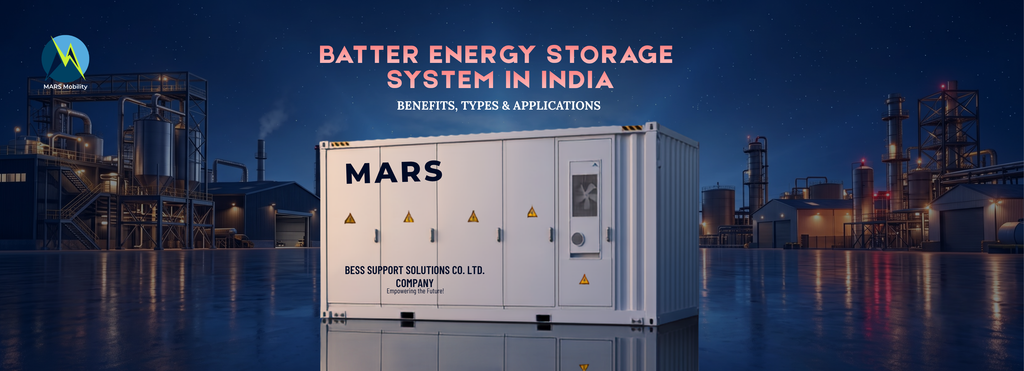
Mars Energy’s containerised storage systems are designed for applications such as utility battery parks, industrial power and commercial microgrids, with configurations ranging from 2.0 MWh to 6.25 MWh.
Commercial Microgrids
Microgrids combine local generation, storage and control systems. Battery storage can stabilise the microgrid and keep important loads running when the main grid is unavailable.
Residential Energy Storage
Residential storage applications include rooftop solar storage, home backup and energy use during evening hours. Homeowners can store daytime solar energy and use it later instead of depending entirely on grid electricity.
Hospitals and Critical Infrastructure
Healthcare facilities and other critical sites need reliable electricity. A battery energy storage system in India can provide rapid power support for selected critical loads while other backup systems start or during temporary interruptions.
Remote and Weak-Grid Locations
Storage is also useful in areas where grid electricity is unreliable or unavailable. Solar generation combined with battery storage can reduce dependence on diesel fuel and improve energy availability.
Residential vs Commercial vs Utility-Scale BESS
The best battery energy storage system in India depends on the size of the electricity load and what the user wants the system to achieve.
| Type | Typical Applications | Capacity Range | Main Purpose |
| Residential | Homes, rooftop solar | kWh | Backup and solar utilisation |
| Commercial & Industrial | Factories, offices, warehouses | Tens to hundreds of kWh | Reliability, peak management and solar integration |
| Utility-Scale | Grid and renewable projects | MWh | Grid balancing and energy shifting |
Residential systems are normally designed for homes, rooftop solar and backup. Capacity is usually measured in kilowatt-hours, and the main goals are power backup and better solar utilisation.
Commercial and industrial systems are larger. These energy storage solutions India businesses use may support factories, warehouses, offices, hotels, institutions and other facilities. Their main goals include peak-demand management, power reliability, solar integration and operating flexibility.
Utility-scale systems are measured in megawatts and megawatt-hours. They are designed for grid support, renewable integration, energy shifting and large-scale power management.
This range shows why a battery energy storage system in India must be selected according to the user’s actual load, scale and operating goals. A home battery and a utility battery park both store electricity, but their engineering, capacity, controls and safety requirements are very different.
How to Choose the Right BESS System
Selecting a battery energy storage system in India should begin with the actual energy requirement rather than only the battery capacity.
First, calculate how much power the site needs in kilowatts and how much energy it needs to store in kilowatt-hours or megawatt-hours. Power tells you how much electricity the system can deliver at one time, while energy capacity tells you how long that power can be supplied.
Battery chemistry is another major consideration. Users should review cycle life, usable depth of discharge, thermal stability, charging speed, maintenance requirements and warranty.
The BESS system should also include a suitable Battery Management System and Energy Management System. These controls protect the batteries and help optimise charging and discharging.
Other important factors include:
- Round-trip efficiency
- Inverter or PCS compatibility
- Cooling and thermal management
- Fire protection
- IP rating
- Operating temperature
- Communication protocols
- Battery cycle life
- Future expansion
- Service and technical support
For businesses evaluating energy storage solutions India offers, site conditions are equally important. Load pattern, solar generation, available space, backup duration and grid quality should all be studied before finalising the system.
Mars Energy Battery Energy Storage Solutions
Mars Energy & Mobility develops energy storage systems for residential, commercial, industrial and utility applications. Its product range includes modular battery systems, commercial and industrial storage, hybrid inverters and containerised BESS.
For larger projects, Mars offers containerised systems with energy capacities from 2.0 MWh to 6.25 MWh and rated AC power from 0.5 MW to 2.5 MW. The systems include thermal management, BMS-controlled cooling, communication through RS485, CAN and Ethernet, and fire-protection features.
Mars also develops commercial and industrial LFP-based storage systems with modular configurations and an in-house Energy Management System. These energy storage solutions India businesses can consider are designed for renewable integration, peak-demand management and power reliability.
By covering systems from smaller modular configurations to large containerised platforms, Mars supports different BESS applications across the energy market.
A properly designed battery energy storage system in India should match the electrical load, operating environment and future energy requirements of the project rather than using a one-size-fits-all configuration.
Frequently Asked Questions
What is the main use of BESS in India?
The main use of a battery energy storage system in India is to store electricity and make it available when demand is higher or power supply is interrupted. It is also used for renewable energy integration, peak management, backup power and grid support.
Which battery technology is commonly used in BESS?
Lithium Iron Phosphate is widely used for stationary battery storage because it offers long cycle life, strong thermal stability and relatively low maintenance. Other battery chemistries may also be used depending on project requirements.
Can BESS work with solar panels?
Yes. Solar integration is one of the most common BESS applications. Excess solar power can charge the battery during the day, and the stored electricity can be used later in the evening, during cloudy periods or during outages.
What is the difference between kW and kWh in a BESS?
kW measures power, which means how much electricity the system can supply at one moment. kWh measures energy, which means how much electricity the battery can store.
Both values are important when selecting a BESS system.
Where can BESS be used in India?
A battery energy storage system in India can be used in homes, factories, offices, commercial buildings, hospitals, data centres, renewable energy projects, microgrids and utility-scale installations. The design changes according to the required capacity and application.
Conclusion
A battery energy storage system in India is becoming an important part of modern power infrastructure. It can improve renewable energy utilisation, provide backup power, support peak-load management and help businesses and utilities use electricity more strategically.
From home solar systems to large utility projects, BESS applications continue to expand as India adds more renewable generation and modernises its grid. Choosing the right technology requires careful assessment of power, energy capacity, safety, efficiency and operating requirements.
For businesses and projects exploring energy storage solutions India can support, Mars Energy offers modular, commercial and containerised battery storage systems for a wide range of applications.
