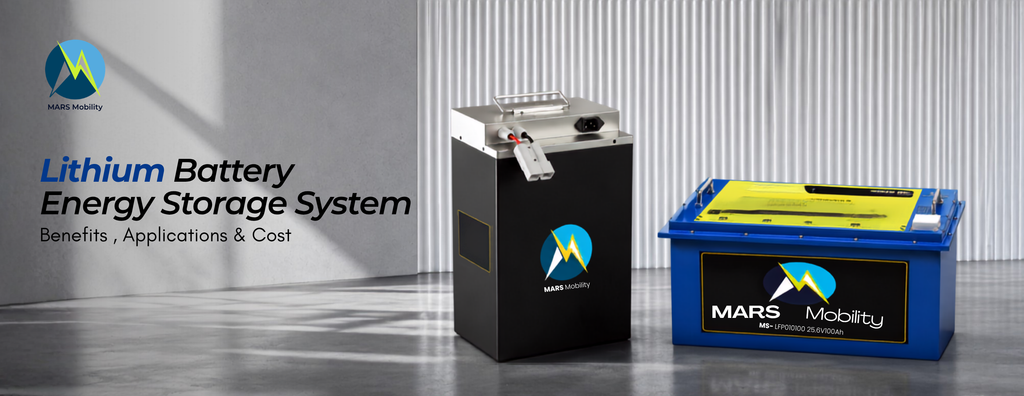
If you’ve been researching backup power or solar storage options recently, chances are you’ve come across the term “lithium battery energy storage system” more than once. It’s quickly become the go-to choice for homes, businesses, and even entire power grids across India, and for good reason.
In this guide, we’ll walk through what a lithium battery energy storage system actually is, how it works, its real benefits, where it’s being used, and, importantly, what it typically costs in India today.
What Is a Lithium Battery Energy Storage System?
A lithium battery energy storage system is a setup that stores electrical energy inside rechargeable lithium-based battery cells, so that power can be used later, whenever it’s needed most. Instead of using older lead-acid batteries, this type of system relies on lithium-ion or lithium iron phosphate (LFP) chemistry, which offers a longer lifespan, better safety, and far higher efficiency.
In simple terms: a lithium battery storage system captures electricity, whether from solar panels, wind, or the regular grid, and holds onto it until you actually need it. That could mean powering your home during a blackout, running a factory during peak demand hours, or helping the electricity grid stay stable during periods of high usage.
How Does a Lithium Battery Energy Storage System Work?
The working principle behind a lithium battery energy storage system is fairly straightforward once you break it down into three stages:
1. Charging – Excess electricity, from solar panels, wind turbines, or off-peak grid supply, flows into the lithium battery cells and gets stored as chemical energy.
2. Storage & Monitoring – A Battery Management System (BMS) constantly monitors the battery’s temperature, voltage, and charge level, protecting it from overcharging, deep discharge, or overheating.
3. Discharging – When power is needed, the stored energy flows back out through an inverter, which converts it into usable electricity for your home, business, or the grid.
This cycle repeats thousands of times over the life of the system, which is exactly why lithium ion battery storage has become so popular: it’s built to handle repeated daily use without losing much performance over the years.
Types of Lithium Battery Energy Storage Systems
Not all lithium battery storage systems are built the same way. The right type depends on where and how it will be used.
Home Battery Storage Compact, wall-mounted lithium battery units designed for residential use. These are typically used alongside rooftop solar panels or as standalone backup power, and usually range from 1kWh to around 5kWh per unit, perfect for keeping essential appliances running during an outage.
Commercial & Industrial (C&I) Lithium Battery Systems Larger lithium battery energy storage system setups, ranging from tens to hundreds of kWh, used by factories, offices, and commercial buildings to manage peak demand charges and ensure uninterrupted operations.
Utility-Scale / Containerized Systems Large, modular lithium battery containers used for grid-level energy storage, renewable integration, and backup power for critical infrastructure like hospitals and data centers.
Lithium Chemistry Types Most modern systems use either NMC (Nickel Manganese Cobalt) or LFP (Lithium Iron Phosphate) cells. LFP has become the preferred choice for Indian conditions, largely because it handles heat better and has a lower risk of thermal runaway compared to NMC.
Key Benefits of a Lithium Battery Energy Storage System
Here’s why so many households and businesses are switching to lithium battery storage:
- Longer Lifespan – A quality lithium battery energy storage system can last 10+ years and handle 6,000+ charge cycles, far outlasting traditional lead-acid batteries.
- Higher Efficiency – Lithium batteries typically offer 90-95% round-trip efficiency, meaning far less energy is wasted during charging and discharging compared to older battery types.
- Compact & Lightweight – A lithium battery storage system takes up significantly less space than an equivalent lead-acid setup, making it ideal for homes and offices with limited room.
- Faster Charging – Lithium-ion battery storage can charge much faster than lead-acid alternatives, useful for both solar integration and quick backup readiness.
- Low Maintenance – Unlike lead-acid batteries, a lithium battery storage system requires little to no regular maintenance, thanks to its built-in Battery Management System.
- Better Safety – Especially with LFP chemistry, modern lithium battery energy storage systems come with strong thermal stability and multiple layers of protection against overheating or short circuits.
- Lower Total Cost of Ownership – While the upfront cost is higher, the long lifespan and minimal maintenance of a lithium battery storage system usually make it cheaper over the long run than repeatedly replacing lead-acid batteries.
Applications of Lithium Battery Storage Systems
Lithium battery energy storage systems are being used across a growing number of applications in India:
- Residential backup power – Home battery storage for uninterrupted power during outages.
- Solar energy storage – Pairing with rooftop solar to store excess daytime generation for evening or nighttime use.
- Commercial peak shaving – Reducing electricity bills by drawing on stored power during expensive peak-demand hours.
- Industrial backup – Keeping manufacturing lines, cold storage, and critical equipment running during grid outages.
- EV charging support – Buffering demand spikes at electric vehicle charging stations.
- Telecom towers – Providing reliable backup power for telecom infrastructure in areas with unstable grid supply.
- Grid-scale storage – Helping utilities balance renewable energy supply and demand at a national level.
Lithium Battery Energy Storage System Cost in India
One of the most common questions people ask is simply: how much does a lithium battery energy storage system cost? The honest answer is, it depends on a few key factors:
1. Capacity (kWh) The bigger the storage capacity you need, the higher the cost. A small 2-5kWh home battery storage unit will cost significantly less than a 100kWh+ commercial system.
2. Battery Chemistry LFP-based lithium battery storage systems are generally more affordable and safer for Indian conditions compared to NMC-based systems, though both have their use cases.
3. Brand & Manufacturer Pricing varies between imported systems and those from a local lithium battery manufacturer in India. Domestically manufactured systems, like those built under the Make in India initiative, often come with better after-sales support and faster servicing, sometimes at a more competitive price point too.
4. Installation & Integration Costs can also depend on whether the system needs to be integrated with existing solar panels, inverters, or an Energy Management System (EMS), which may add to the overall project cost.
5. Warranty & Cycle Life Systems with longer warranties and higher rated cycle life (6,000+ cycles) may cost more upfront but typically offer better long-term value.
As a rough guide, small residential lithium battery storage systems in India can start in the range of a few thousand rupees per kWh, while larger commercial and industrial systems are typically quoted on a per-project basis after assessing load requirements. It’s always best to get a customized quote from a trusted lithium battery manufacturer in India based on your specific power needs.
Lithium-Ion Battery Storage vs Lead-Acid Batteries
| Feature | Lithium Battery Storage System | Lead-Acid Battery |
| Lifespan | 10+ years, 6,000+ cycles | 3-5 years, 300-500 cycles |
| Efficiency | 90-95% | 70-80% |
| Maintenance | Minimal | Regular (water topping, etc.) |
| Size & Weight | Compact, lightweight | Bulky, heavy |
| Charging Speed | Fast | Slower |
| Safety (with BMS) | High, especially LFP | Moderate |
| Upfront Cost | Higher | Lower |
| Long-Term Cost | Lower overall | Higher due to frequent replacement |
As the table shows, while lead-acid batteries may look cheaper on paper, a lithium battery energy storage system almost always works out more cost-effective over its full lifespan, thanks to fewer replacements and lower maintenance needs.
How to Choose the Right Lithium Battery Manufacturer in India
When shopping for a lithium battery energy storage system, keep these factors in mind:
- Cell quality & chemistry – Prefer LFP-based systems for better safety in Indian climate conditions.
- BMS quality – A strong Battery Management System is what actually protects your investment over time.
- Local manufacturing – Choosing a lithium battery manufacturer in India, rather than an imported brand, usually means faster support, easier servicing, and better accountability.
- Certifications – Look for manufacturers with proper safety certifications and in-house testing standards.
- Warranty terms – A longer, clearly defined warranty is a good sign of manufacturer confidence in their product.
- Customization options – Whether you need home battery storage or a large industrial lithium battery energy storage system, the manufacturer should be able to configure the system to your specific needs.
Mars Energy: Trusted Lithium Battery Manufacturer in India
At Mars Energy & Mobility, we manufacture lithium battery energy storage systems built specifically for Indian conditions, from compact home battery storage units for homes and offices, to large-scale Commercial & Industrial lithium battery systems, to full containerized BESS for industrial and grid-scale needs.
Every lithium battery storage system we manufacture uses LFP battery chemistry, an in-house Battery Management System, and is proudly built under the Make in India initiative in Kanpur, Uttar Pradesh. Whether you’re looking for reliable home battery storage or a lithium battery manufacturer in India for a larger commercial project, our team can help you find the right fit and a transparent cost estimate.
Contact our team to get a custom quote for your lithium battery energy storage system requirements.
Frequently Asked Questions
Is a lithium battery energy storage system worth the cost? Yes, for most homes and businesses. While the upfront cost is higher than lead-acid batteries, a lithium battery storage system lasts significantly longer, needs less maintenance, and ends up cheaper over its full lifespan.
What is the average lifespan of a lithium battery storage system? Most quality lithium battery energy storage systems, especially LFP-based ones, are rated for 10+ years and 6,000+ charge cycles when properly maintained.
Can a lithium battery energy storage system be used with solar panels? Yes. In fact, pairing solar panels with a lithium battery storage system is one of the most common and effective setups, allowing you to store daytime solar generation for use in the evening or during outages.
How is lithium-ion battery storage different from lead-acid batteries? Lithium ion battery storage offers higher efficiency, a much longer lifespan, faster charging, and lower maintenance compared to traditional lead-acid batteries, though it comes at a higher initial cost.
How do I get an accurate cost estimate for a lithium battery energy storage system? The best way is to reach out to a trusted lithium battery manufacturer in India, like Mars Energy, and share your power requirements. Cost depends on capacity, chemistry, installation needs, and warranty terms, so a customized quote is more accurate than a generic price estimate.
